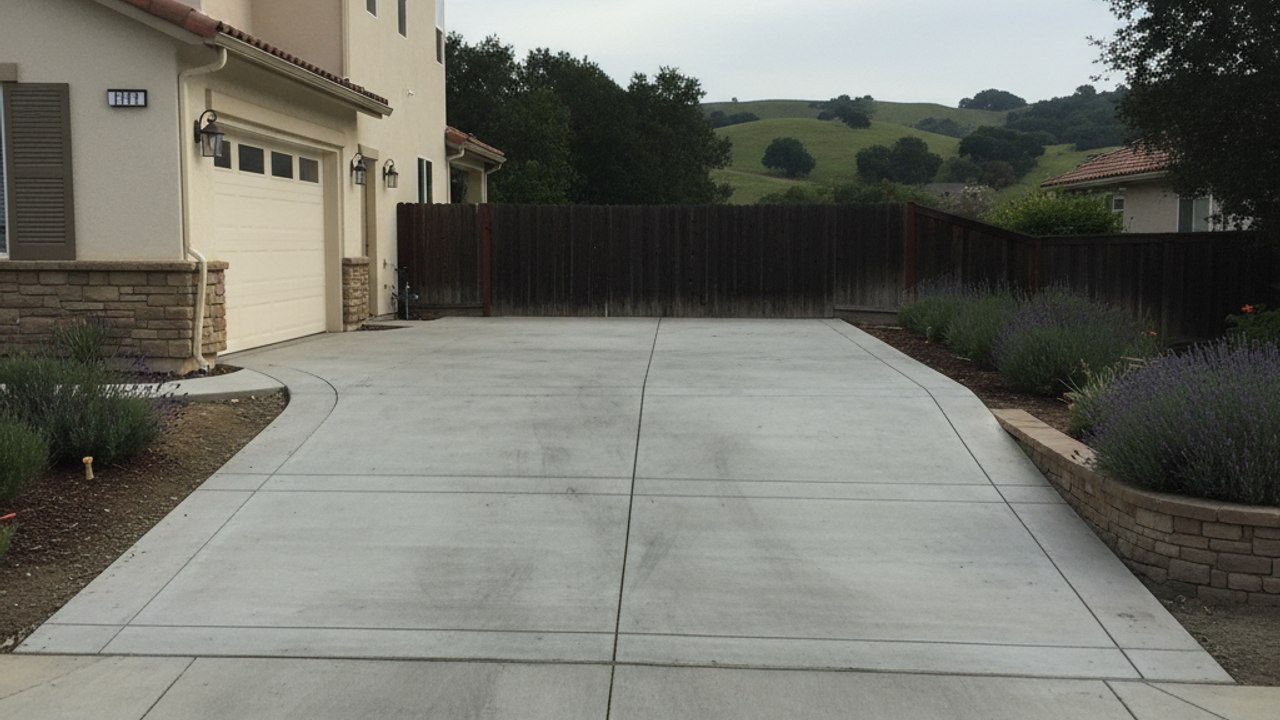
Homeowners ask us this a lot, usually after they've already picked a date based on nothing more than when the contractor had an opening. Timing matters more than most people expect, because concrete isn't a product you install, it's a chemical reaction you're trying to manage. Get the weather wrong and you get surface cracking, a chalky weak top layer, or a slab that never quite hits the strength it's supposed to.
What's actually happening while it cures
Fresh concrete needs water to hydrate the cement, and that reaction wants to happen between roughly 50°F and 90°F. Below 50, hydration slows down and strength gain drags out. Above 90, especially with any wind, the surface water evaporates faster than it can bleed up from inside the slab. That's called plastic shrinkage cracking, and it shows up as a web of hairline cracks within the first few hours, sometimes before the crew has even left the job site. Anaheim doesn't have a frost problem like colder states do, our ground basically never freezes, so we don't deal with the freeze-thaw damage you'd see in a place like Denver or Chicago. Our risk runs the other direction: too hot and too dry, not too cold.
The rainy season (November through March)
Most of Anaheim's rain falls in these five months, usually as a handful of Pacific storm systems rather than steady daily rain. A fresh pour needs at least 24 hours before it can take a hard rain without the surface paste washing out or pitting. We watch the forecast closely and we'll push a pour date rather than gamble on a storm track. The upside of winter here is the temperature. Highs in the 60s and low 70s are close to ideal for curing, so if you catch a dry stretch, which happens often even in January, the work can actually turn out better than a July pour. The risk isn't the cold, it's getting rained on before the slab sets up.
Summer heat and the wind nobody talks about
June through September, Anaheim regularly sees highs in the mid-90s, and a Santa Ana wind event can drop humidity into single digits even in October. That combination is brutal on fresh concrete. We start pours at first light to get ahead of the heat, use evaporation retardants on the surface, and sometimes fog the slab with a fine mist to keep it from drying too fast before it's finished. Stamped concrete is especially sensitive here, because the crew has a narrower window to get the pattern stamped before the mix sets up, and heat shortens that window. Summer work is absolutely doable, it's just a different job site than a cool morning in April. If a contractor tells you summer heat doesn't change anything about how they pour, that's worth a second question.
Spring and fall are the easy months
March through May and again September through November, Anaheim sits in the 65 to 80°F range without much rain and without the harsh Santa Ana wind pattern that peaks in late fall. This is when curing takes care of itself, there's less babysitting of the surface, and the schedule has more slack because we're not racing a storm or a heat spike. A driveway or patio poured in these windows typically needs about 7 days before it can take regular foot and car traffic, and reaches its full 28-day design strength on the normal schedule. That's not unique to spring and fall, but you get there with fewer surprises.
The ground under the slab matters as much as the sky above it
Older Anaheim neighborhoods near the Colony district were built on flatter alluvial soil, and a lot of those original driveways and walks were poured thin, with wire mesh instead of rebar, which is part of why you see so much cracking and settling on streets from that era. Up in Anaheim Hills, the ground is often fill over a graded slope, and that soil moves more than people expect when it gets saturated in a wet winter. Retaining walls and slabs up there need deeper footings and better drainage behind them, not just a thicker pour. On any lot, we're grading the subgrade to fall away from the house, usually a quarter inch of drop per foot, so a downpour doesn't pond against the foundation or sit on a new patio. Clay-heavy soil, which shows up in pockets around the flatter parts of the city, holds water and swells, so we compact the base properly before anything gets poured rather than relying on extra concrete to cover for a soft subgrade.
Permits and inspections don't pause for weather
Anaheim's Building Division handles permits for new slabs, foundations, and retaining walls, and work in the public right-of-way, like a driveway apron that meets the street, usually goes through Public Works as well. Expect an inspection of the forms and any rebar or mesh before the pour gets approved, and a final inspection after. If you're in an HOA, which is common in Anaheim Hills and some of the newer developments, plan on their approval running alongside the city process, not instead of it. None of that changes with the season, but a rain delay on the pour date can push the inspection schedule too, so it's worth building a few extra days of slack into a winter project.
There's no single wrong month to pour concrete in Anaheim, but spring and fall ask the least of the crew and the material. If you're planning a driveway, a patio, or a repair and want a read on the right window for your specific lot, Charis Concrete Co can walk the site and tell you what the soil and sun exposure actually call for.