Most people call a concrete contractor and think the first step is scheduling the pour. It isn't. The first step is figuring out what's going on below your feet and above your head before anyone mixes a truckload. Skip that part and you find out the hard way, usually a year or two later when a slab cracks in a straight line or water starts pooling against your foundation.
Here's what's actually worth looking at before you commit to any concrete work on your property, whether it's a driveway, a patio, a pool deck, or a repair.
What the soil under your yard is doing
Anaheim doesn't have one soil type. Lots closer to the Santa Ana River tend to run sandier, which drains fast and doesn't move much. Further from the river, and especially on older lots that used to be part of the citrus groves this city was built on, you get a heavier clay content that expands when it's wet and shrinks hard when it dries out. That swelling and shrinking is what cracks slabs that were poured on a thin, unprepared base. A soil test isn't always necessary for a small patio, but for a driveway or a foundation slab, a few test holes dug by hand to see what you're dealing with at 12 to 18 inches down tells you a lot before the forms go in.
Where the water goes when it rains
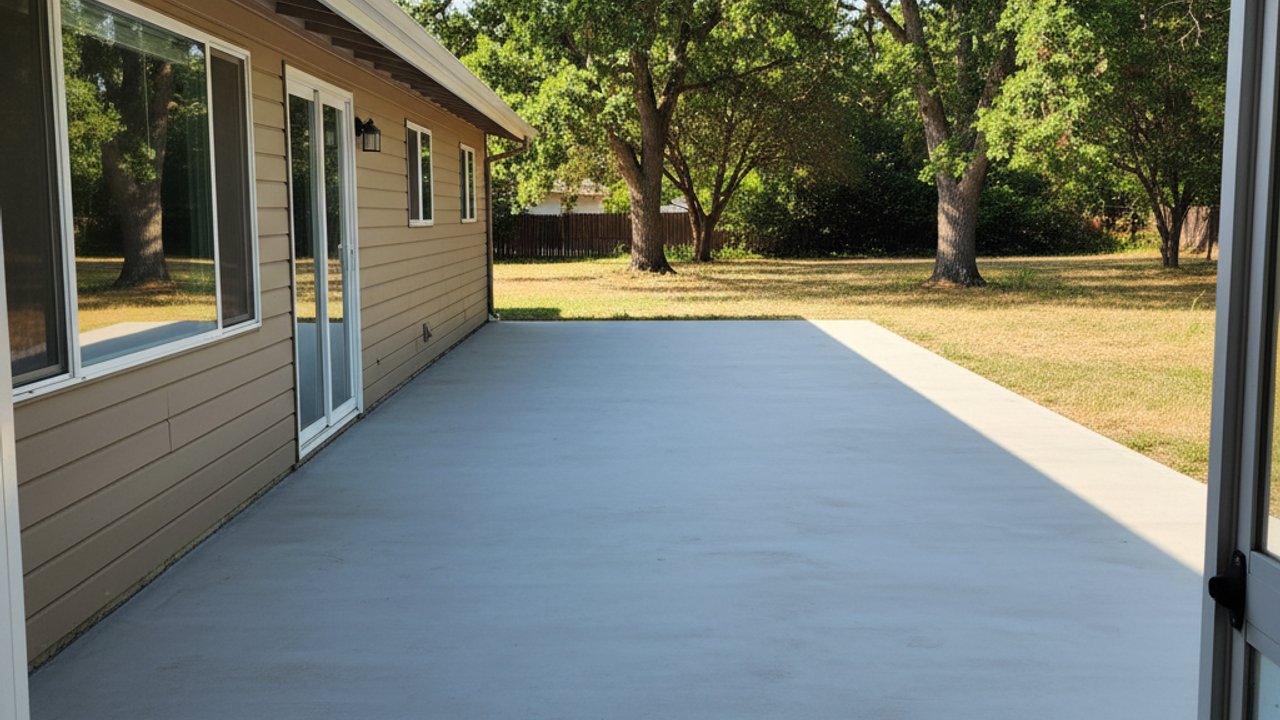
Anaheim gets most of its rain between December and March, and it tends to come in short, heavy bursts rather than a steady drizzle. A slab that's flat, or worse, sloped toward the house, turns your patio into a wading pool during one of those storms. Concrete flatwork should pitch away from the structure at roughly a quarter inch per foot. Check where your existing downspouts and yard drains empty before you pour anything near them, because a new slab can block a drainage path that's been quietly doing its job for decades.
Who needs to sign off before work starts
The City of Anaheim Building Division issues permits for most slab work over a certain size, and driveway aprons that touch the public sidewalk or street usually need an encroachment permit on top of that, since that strip of concrete technically sits in the city's right of way. If you're in a planned community, Anaheim Hills and several of the newer developments around the Platinum Triangle have HOAs with their own architectural review, and they can hold up a project longer than the city does. A quick call or a look at your property survey before you schedule anything saves you from tearing out work that doesn't meet a setback or an HOA guideline.
What's already buried where you want to dig
Older neighborhoods around the Anaheim Colony historic district were built mostly between the 1900s and the 1950s, and the clay sewer laterals and galvanized water lines from that era are still in the ground on plenty of lots. Newer tract streets from the 1970s and 80s in Anaheim Hills have PVC and are usually better documented. Either way, call for utility locates before digging, and walk the yard yourself looking for sprinkler lines, old tree roots, and any low spots that hint at a buried drain line. Mature trees along older streets send roots a long way looking for water, and they will lift a slab from underneath over several years even if the surface work was done correctly.
The slab itself, thickness and reinforcement
A standard patio slab runs 4 inches thick. A driveway that's going to carry a car, let alone a truck or an RV, needs 5 to 6 inches and should have reinforcement, either rebar on an 18-inch grid or welded wire mesh held up on chairs so it actually sits in the middle of the pour instead of sinking to the bottom. Mesh that ends up at the bottom of the slab does almost nothing. Ask what reinforcement is going in and how it's being held in place, not just whether rebar is included.
Control joints and when they get cut
Concrete cracks. That's not a defect, it's what the material does as it cures and shrinks. Control joints give it a place to crack where you won't see it, instead of wherever it decides on its own. The rule of thumb is joint spacing at about 24 to 30 times the slab thickness in inches, which for a 4-inch patio works out to roughly every 8 to 10 feet. Those joints need to be cut within the first 24 hours after the pour, while the concrete is still green enough to cut clean but has set enough to hold the cut. Wait too long and you're not controlling the crack anymore, you're just hoping.
Cure time and when you can actually use it
Concrete reaches most of its strength in the first week and keeps gaining strength for about 28 days. In Anaheim's summer heat, especially July and August when surface temps can climb fast, the top of a slab can dry out before the concrete underneath has properly cured, which leads to surface cracking and dusting. A contractor should be keeping it damp or covered for several days in hot weather, not just walking away after the finish work. As a general guide, you can usually walk on a new slab after about 24 to 48 hours and drive on a driveway after 7 days, but full strength takes the full month.
If you're repairing or resurfacing instead of pouring new
Not every crack means tear it out and start over. Hairline cracks that aren't moving are usually cosmetic. A slab that's sinking on one side, or a crack where one edge sits higher than the other, points to soil movement underneath, and resurfacing over that without fixing the base just hides the problem for a year or two. Worth knowing before you pay for a cosmetic fix on a structural issue.
None of this is complicated, but it's easy to skip when you're excited to get a new driveway or patio finished. If you want someone to walk your property and point out what actually applies to your lot before you spend money, that's the kind of conversation we have with homeowners before every job we quote. You can see more about our concrete contractor work around Anaheim and the surrounding towns.